
Business context
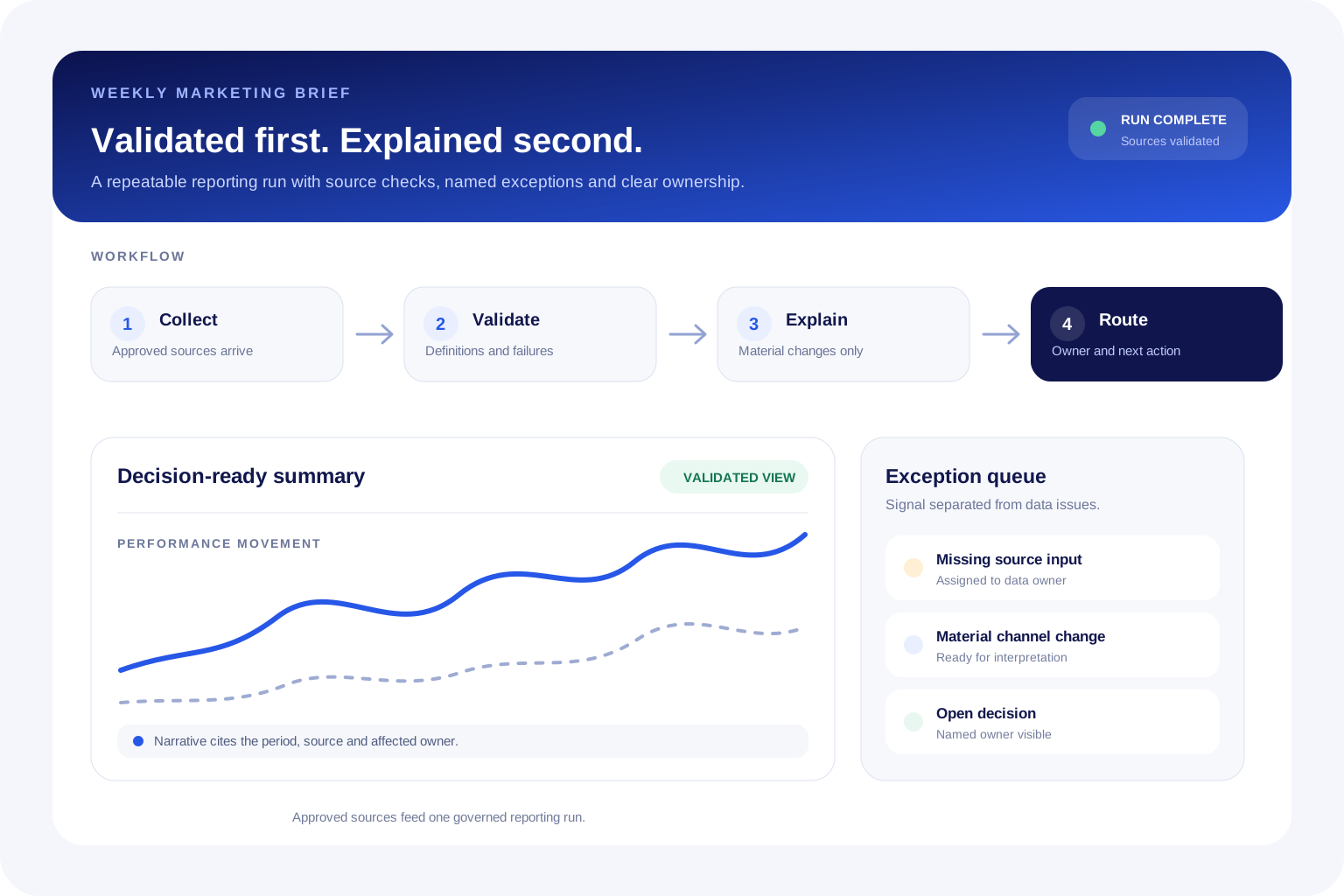
The reporting workflow validates source inputs before it explains performance and routes each material exception to a named owner.
A marketing team combines media, analytics, CRM or commerce data every week. Leaders want a short view of what changed, why it matters and who is responding.
Manual reporting consumes skilled time but still delivers late surprises. Because collection, validation and interpretation happen together, a broken input can be mistaken for a performance problem.
The operating problem
The same sources are exported, cleaned and summarized every week.
Reporting depends on manual steps and knowledge held by a small number of people. Missing inputs or unusual changes are often discovered late in the reporting cycle.
What the reporting workflow does
MATTE turns the current reporting process into a documented run with explicit data checks, business definitions and exception ownership.
01 Schedule collection
The approved data sources are retrieved on the agreed reporting schedule.
02 Apply shared definitions
Metrics, currencies, date rules and calculations follow one documented model.
03 Validate before interpretation
The workflow checks missing inputs, failed runs and unexpected variances before drafting commentary.
04 Route a decision-ready summary
Stakeholders receive the material changes, known data limitations, named owners and open actions.
What changes for the business
The team spends less time rebuilding the report and more time responding to it. Leaders receive consistent definitions and a visible distinction between a data-quality issue, a performance change and an action already in progress.
Measure it with: report preparation time, on-time delivery, failed data checks, manual corrections and time to assign material exceptions.
Controls and ownership
Automation has a boundary.
The workflow uses approved sources and documented calculations. Generated narrative should cite the underlying metric and period. Material decisions remain assigned to a named person.
Operating owner: Marketing operations owns the run. Channel owners validate interpretation, and leadership owns the decisions recorded in the report.